Clustering groups keywords. SERP scan checks reality.
Traditional clustering assumes topical relationships in isolation.
But real websites already have:
- existing content
- overlapping intent
- partial topic coverage
- evolving query relationships
And Google may interpret pages differently than the original keyword plan.
So now I’m working on adding some reality checks into clustering with SERP scan and site scan additions.
Most SEO workflows are static:
research → generate → publish
But sites evolve over time.
Pages drift.
Clusters overlap.
Content becomes stale.
Google changes query associations.
This system is starting to treat the site as a living structure instead of a collection of isolated pages.
Add a site
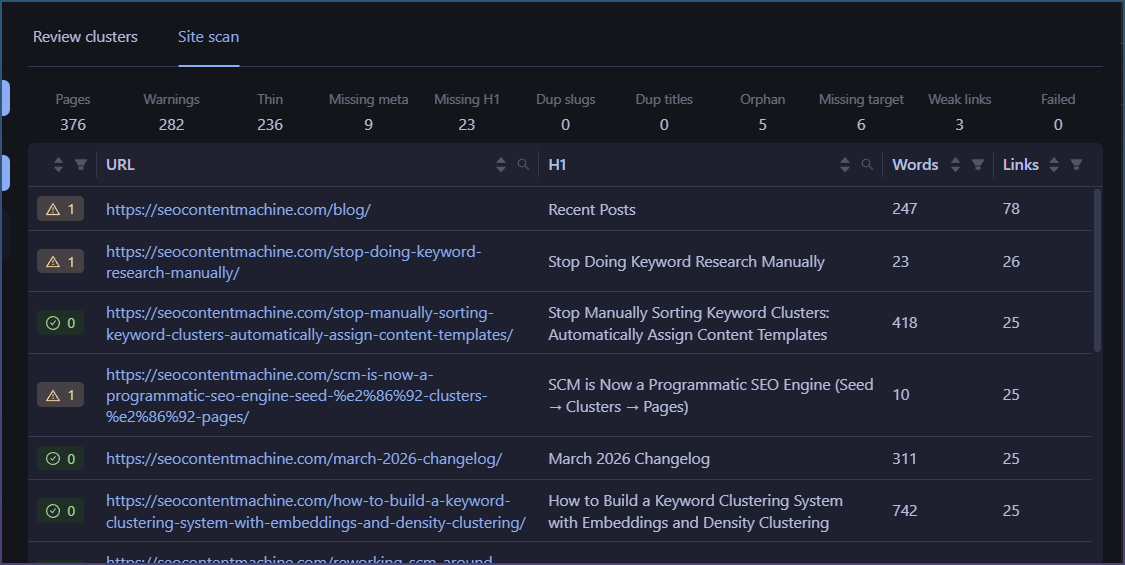
App scans your site for content.
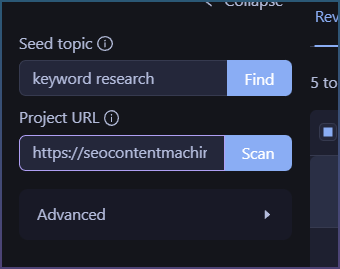
Basic scan results.
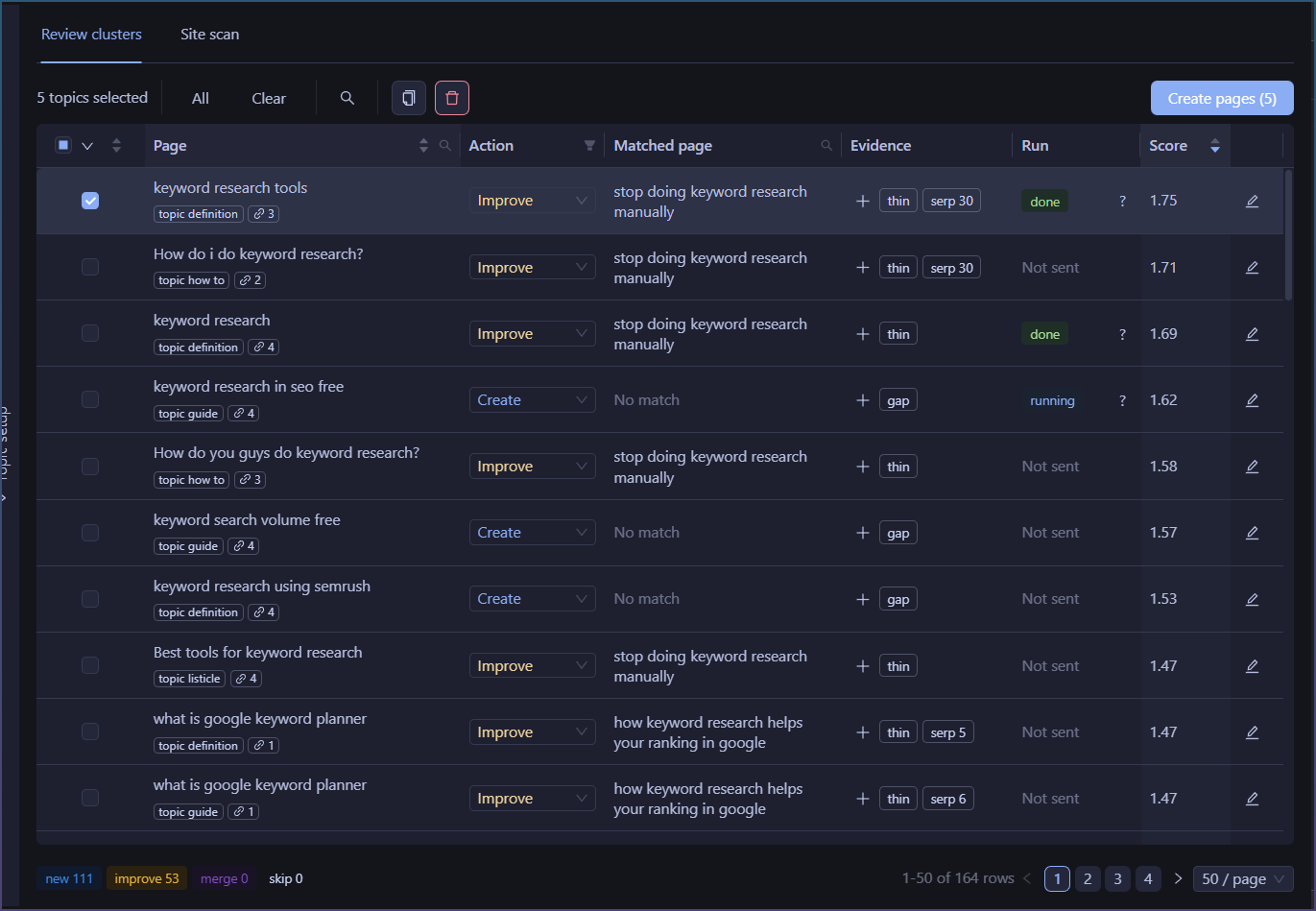
Cross check with clustered keywords
Here is the cool part.
We can now match cluster topics with existing pages on the site.
The goal is no longer just creating new pages.
The system should understand:
- what already exists
- where semantic overlap exists
- which clusters are weak
- where supporting content is missing
- and how Google interprets the site over time
You can quickly see:
- what already has coverage
- what is missing
- where overlap may exist
SERP scan
Get extra intelligence with SERP scan.
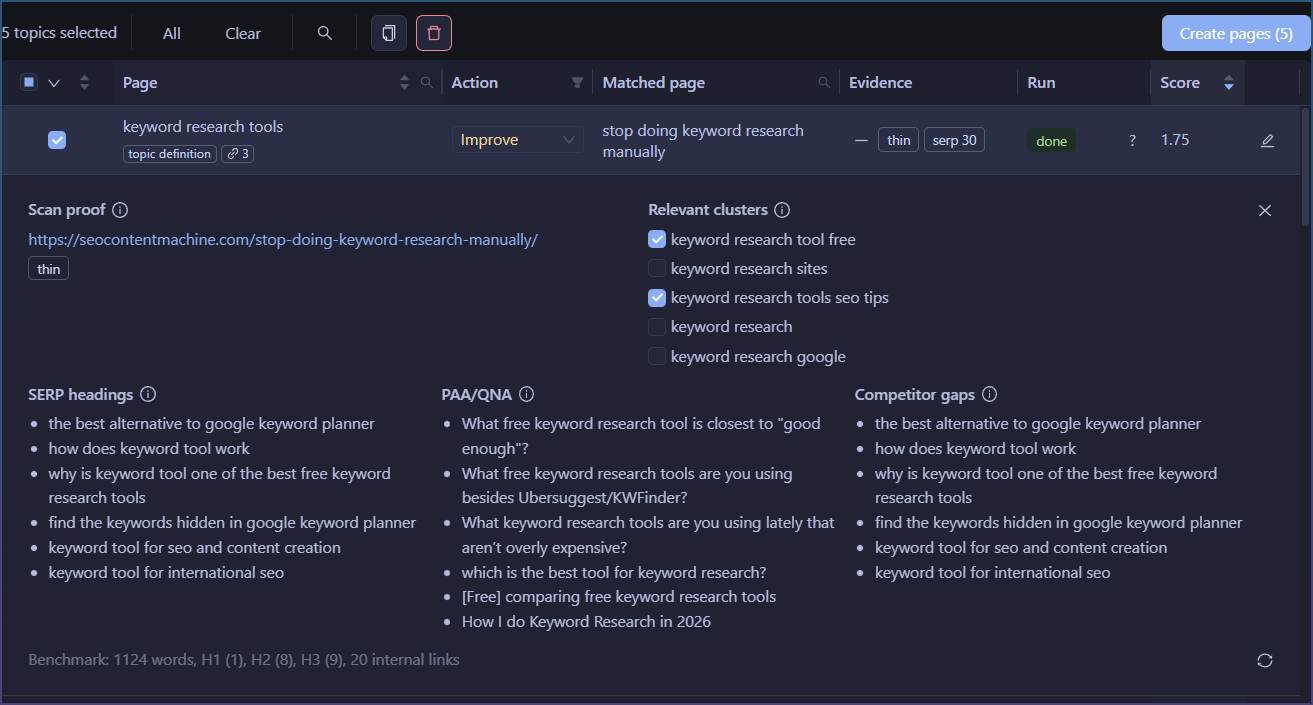
Right now most of it is gathering extra operational information and relationships.
Clustering groups keywords.
SERP scan checks reality.
WIP actions
Ie so now what?
Actions are currently based on 4 resolutions.
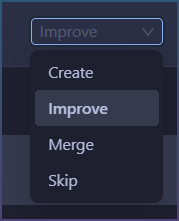
A weak cluster may need:
- new supporting pages
- refreshed coverage
- consolidation
- semantic cleanup
Create is easy because thats what we already have with page pipeline link.
Improve and merge is harder.
Semantic overlap is not always harmful.
Sometimes overlap strengthens topical authority.
Sometimes it creates cannibalization.
The hard part is understanding intent relationships instead of just duplicate keywords.
Project console
Eventually you can manage posts and track directly from this screen.
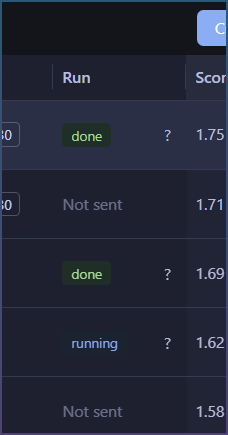
Right now it can already start and track generated content directly from the topic cluster.
This is all still being built and refined.
Long term the goal is moving from static page generation toward continuous SEO operations.
Not just creating content but understanding how topical systems evolve over time.